7864 US-117 Suite A, Rocky Point, NC 28457, United States


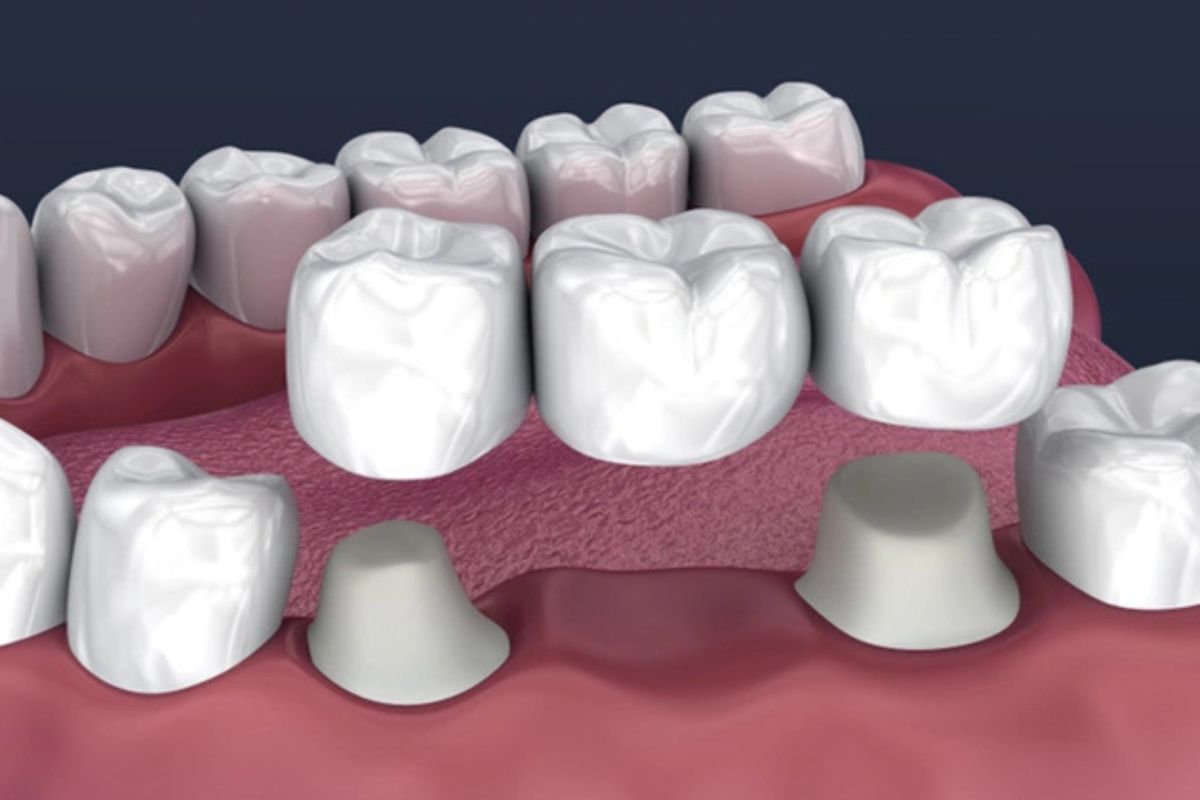
Most people assume that once a dental bridge is placed, the job is done. You chew, you eat, life goes on. But here is something many patients don’t realize until they’re sitting in the dental chair: bridges can quietly weaken over time, and the signs are easy to miss.
This isn’t about scaring you. It’s about giving you practical, honest information so your restoration lasts as long as it should — which, with proper care, can be 10 to 15 years or more.
The Teeth You Can’t See Are the Ones That Matter Most
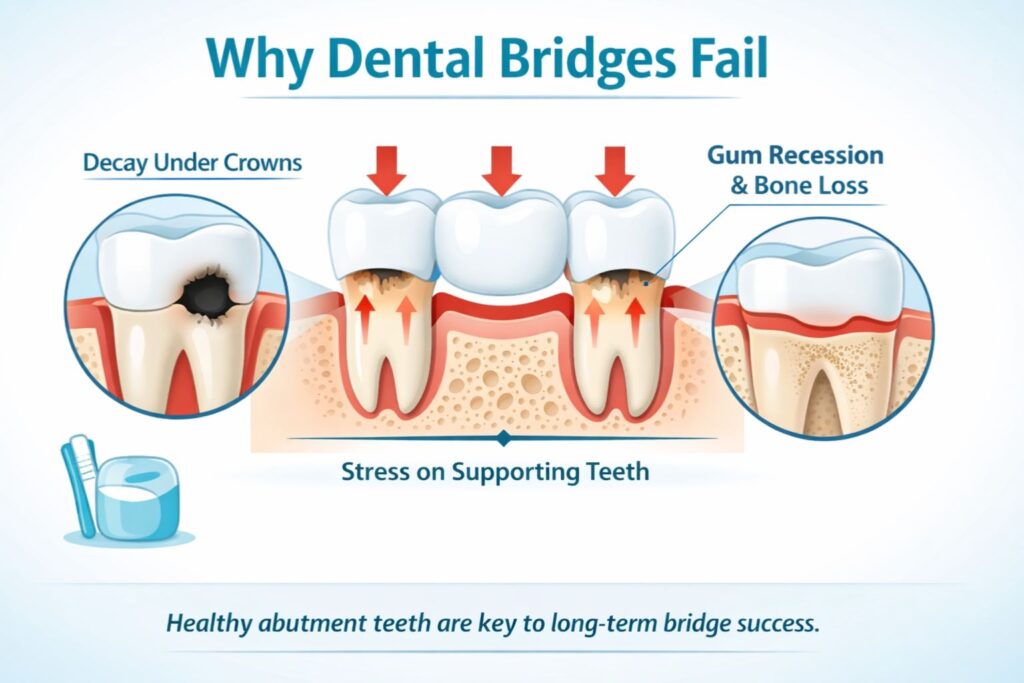
A dental bridge doesn’t just sit on its own. It relies on the natural teeth on either side — called abutment teeth — to hold it in place. These supporting teeth take on extra pressure with every bite.
Over time, that pressure can cause issues:
- The abutment teeth may develop decay underneath the crown
- The gum tissue around the bridge can recede
- Bone loss can occur silently if the area isn’t cleaned properly
This is why getting a dental bridge in Rocky Point, NC, means more than just the procedure — it means committing to the aftercare that protects it.
What Actually Causes a Bridge to Fail Early
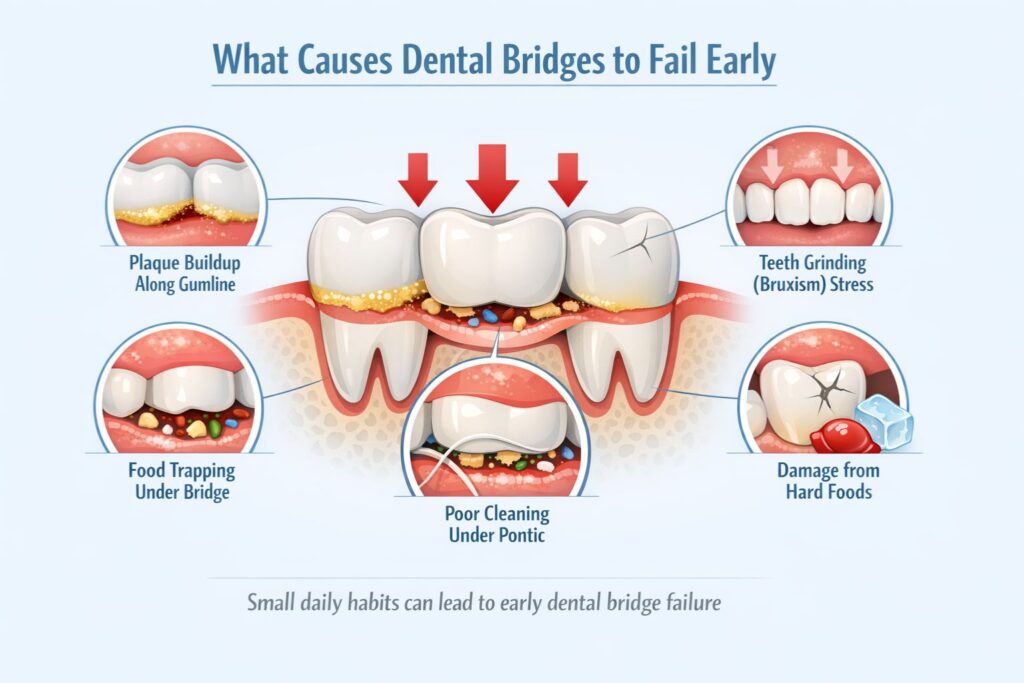
Bridges don’t break down all at once; typically, there is a long-term build-up of minor problems that could have been prevented. Here are some reasons why bridges fail.
- Food and bacteria collect on the bridge: The space between the bridge and gum tissue creates a perfect place for plaque to accumulate; brushing alone does not reach it.
- Not flossing, primarily under the pontic: The pontic is the artificial tooth located in the center of the bridge. Although the pontic does not directly contact the gum tissue, it will still accumulate debris beneath it. You will need either a floss threader or a water flosser to clean underneath the pontic properly.
- Grinding teeth at night: Many individuals in Rocky Point who grind their teeth are unaware of this habit; however, grinding places significant stress on the bridge (especially on the posterior molars) and may cause the bridge to crack or lose retention earlier than anticipated.
- Constantly chewing hard foods: Chewing on ice, hard candy, or certain types of crusty bread may seem like minor habits, but over time, they can loosen the cement holding your bridge in place.
Daily Habits That Actually Protect Your Bridge
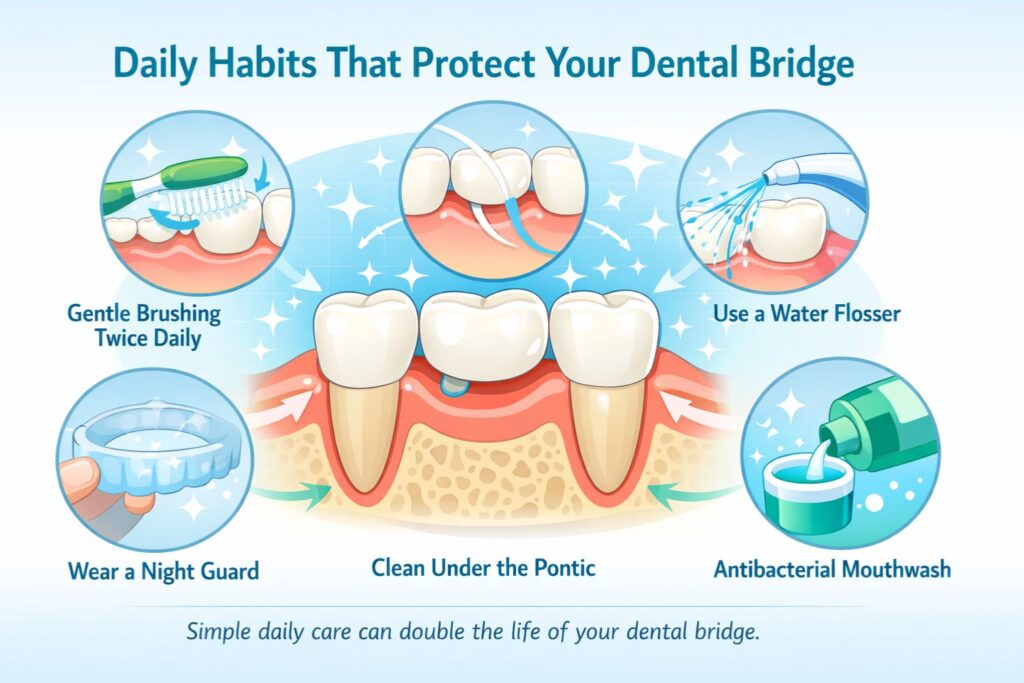
The following is an effective system for maintaining your oral hygiene:
- Brush: Brush your teeth twice daily using a soft-bristle toothbrush. Using a hard-bristle toothbrush will wear away the cement on your bridge and irritate your gum tissue.
- Flossing: You should use a floss threader or interdental brush daily to clean under and around your bridge.
- Water Flosser: A water flosser can be used if you have difficulty using traditional dental floss.
- Night Guard: If your dentist has mentioned that you grind your teeth at night, using a night guard can prevent extensive, costly repairs to your bridge.
- Mouthwash: Rinse with an antibacterial mouthwash to reduce bacteria around the abutment teeth of your bridge.
The suggestions above will ultimately result in either a bridge lasting 10 years or a bridge requiring replacement within 5 years.
When to See Your Dentist Before Your Next Scheduled Visit
Don’t wait for your next checkup if you notice:
- The bridge feels loose or shifts slightly when chewing
- Sensitivity or pain around the abutment teeth
- A bad taste or odor that doesn’t go away with brushing
- Visible gaps forming between the bridge and gum
These are early warning signs. Catching them early usually means a simple fix — waiting can mean more complex treatment.
Residents near the Holly Ridge and Hampstead areas who have had restorative dental work often delay these visits, thinking it’s minor. In most cases, early intervention saves both time and money.
How Often Should a Bridge Be Professionally Checked?
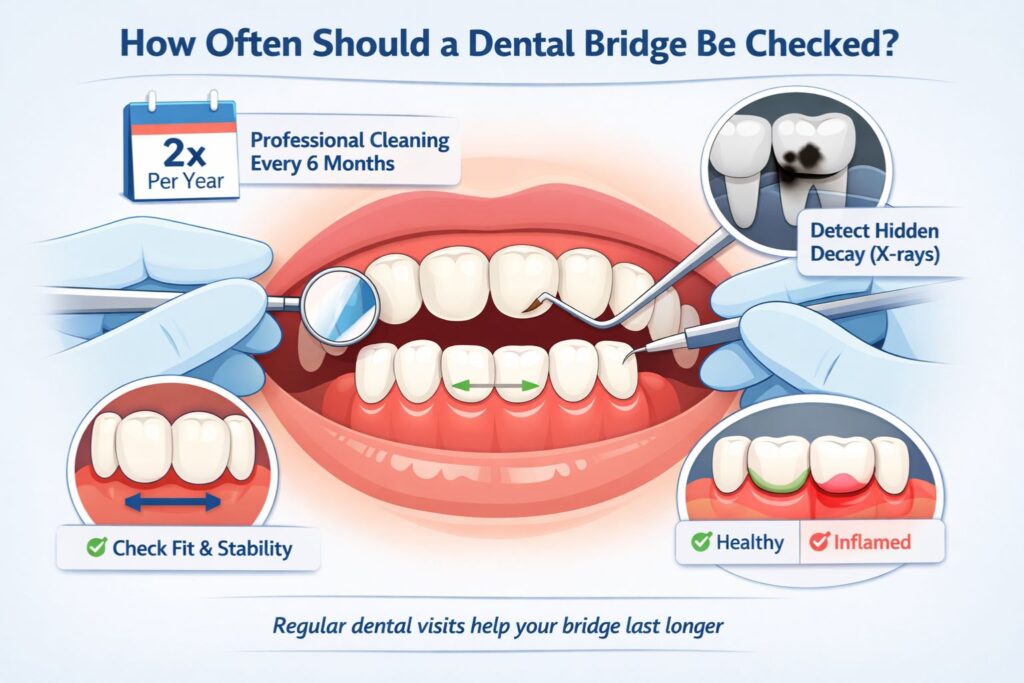
The general recommendation is to have a professional clean and examine your bridge twice a year. However, if you have a bridge, your dentist will likely check it more carefully each time you come in for an appointment. This includes an examination of how well the bridge fits, how well the abutment teeth are holding up, and how healthy the gum tissue underneath the bridge is.
Your dentist may also take x-rays during your appointments to check for decay developing beneath the crowns supporting your bridge that is not visible to the naked eye. This is one of the reasons it is so important to continue visiting the dentist regularly after receiving a dental bridge in Rocky Point, NC.
Conclusion: A Little Preventive Care Today Can Avoid a Major Problem Tomorrow
A dental bridge in Rocky Point, NC, can be an effective, long-term method of replacing a missing tooth; however, it requires regular maintenance to remain effective. Patients who get the most benefit from their bridge think of it as a long-term investment, not just something they will do once.
At Rocky Point Family Dentistry, we strive to ensure that each restoration we provide to our patients lasts as long as possible. To ensure this, we believe it is important to educate our patients on how to best care for their restored teeth so they remain functional for many years to come.
If you have any questions about your dental bridge or would like us to assess its condition, scheduling an appointment with us is the quickest way to get started.
Common Questions Most People Ask
1. How long does a dental bridge typically last?
With good oral hygiene and regular dental visits, a bridge can last 10 to 15 years. Some last longer depending on the material and care.
2. Can a dental bridge fall out?
Yes. If the cement weakens, decay develops under the abutment crowns, or the bridge is damaged, it can become loose or dislodge. This is why early signs should never be ignored.
3. Is it normal for a bridge to feel different when chewing?
Some adjustment is normal in the first week. If discomfort continues beyond that, contact your dentist — it may need a minor bite adjustment.
4. Can I eat normally with a dental bridge?
Generally, yes. However, very hard or sticky foods should be avoided as they can stress or dislodge the bridge.
5. Do I really need to floss under my bridge?
Yes. The area under the pontic collects bacteria and debris. Failing to clean it leads to gum disease and decay in the supporting teeth.