7864 US-117 Suite A, Rocky Point, NC 28457, United States

A beautiful smile can give you confidence and enhance your overall look. However, if you have lost teeth, then your smile may feel incomplete. Missing your teeth not only makes eating difficult, but also affects your looks. A dental bridge can help restore both the function and beauty of your smile if you are missing one or more teeth. Dental bridges in Rocky Point provide a long-term solution for filling gaps and preventing further dental issues.
Dental bridges are designed to replace missing teeth using nearby natural teeth or dental implants. Depending on your specific needs, different types of dental bridges can work for you. Knowing which bridge is right for you can help ensure the desired outcomes.
Understand Dental Bridges
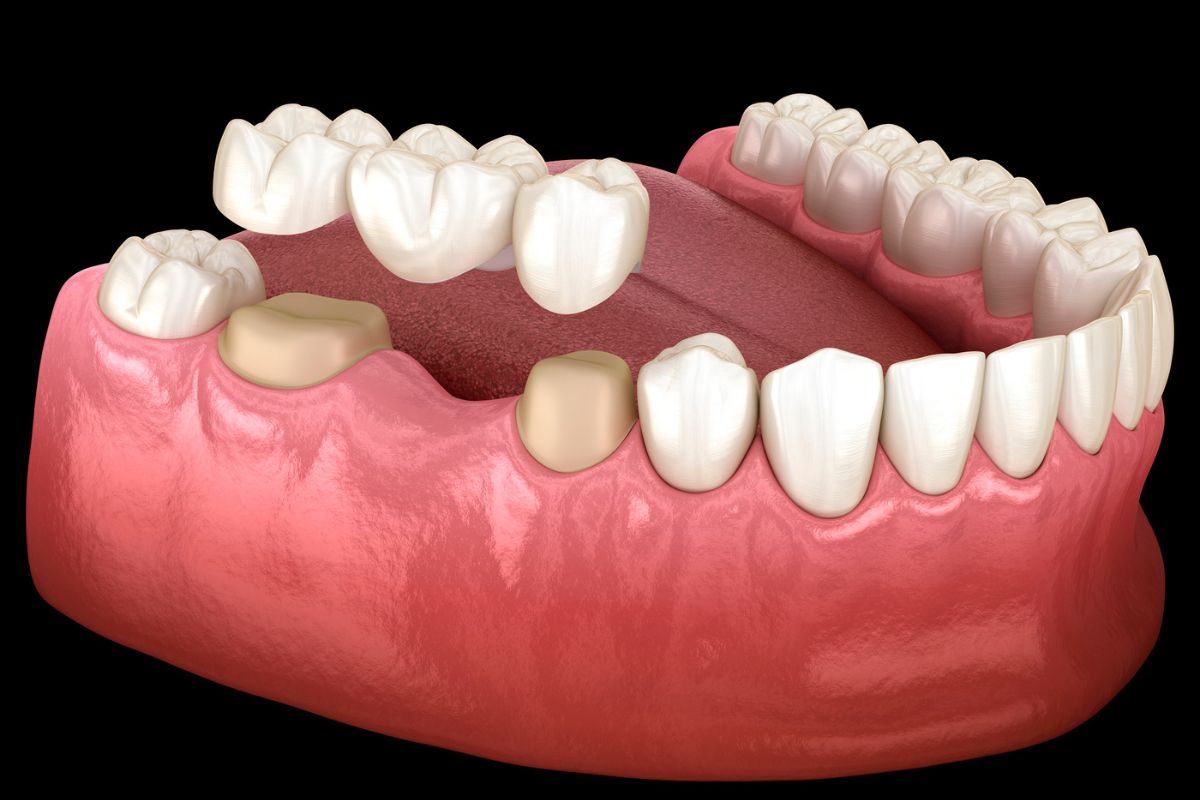
Dental bridges are prosthetic devices that replace missing teeth, bridging the gap between the natural teeth. There are different types of bridges suitable for various situations. Which type is best for you depends on your oral health, how many teeth are missing, and the condition of your remaining teeth. A dentist will help with this after a thorough examination to determine the right course of action.
Currently, dental bridges in Rocky Point come in four main forms: traditional, cantilever, Maryland, and implant-supported. Each has its own unique features and benefits, so let’s delve into each option.
1. Traditional Dental Bridges
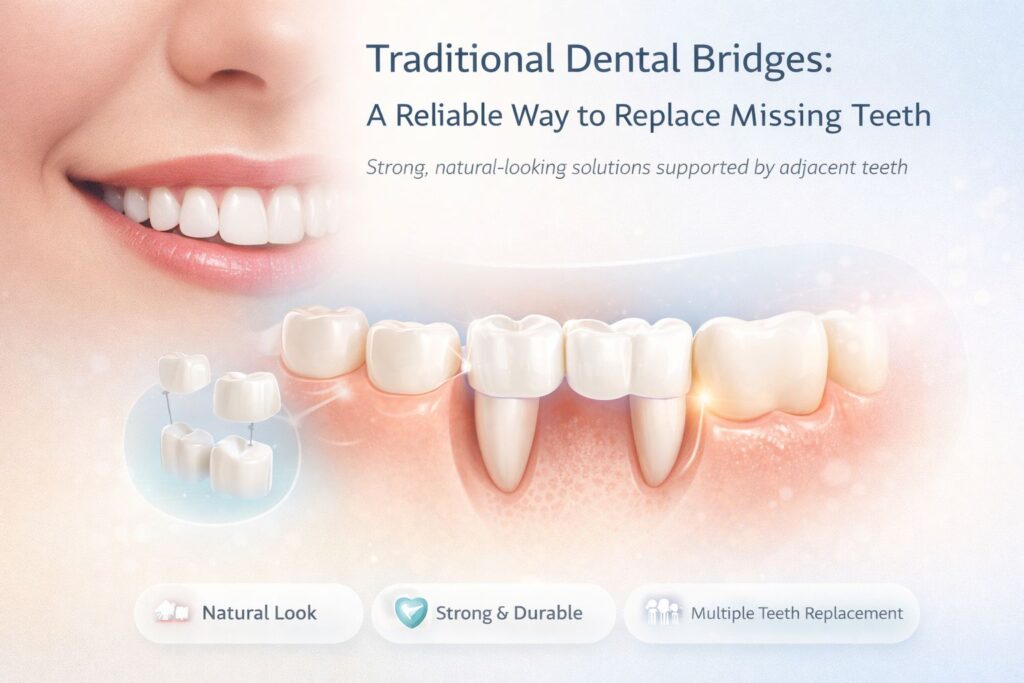
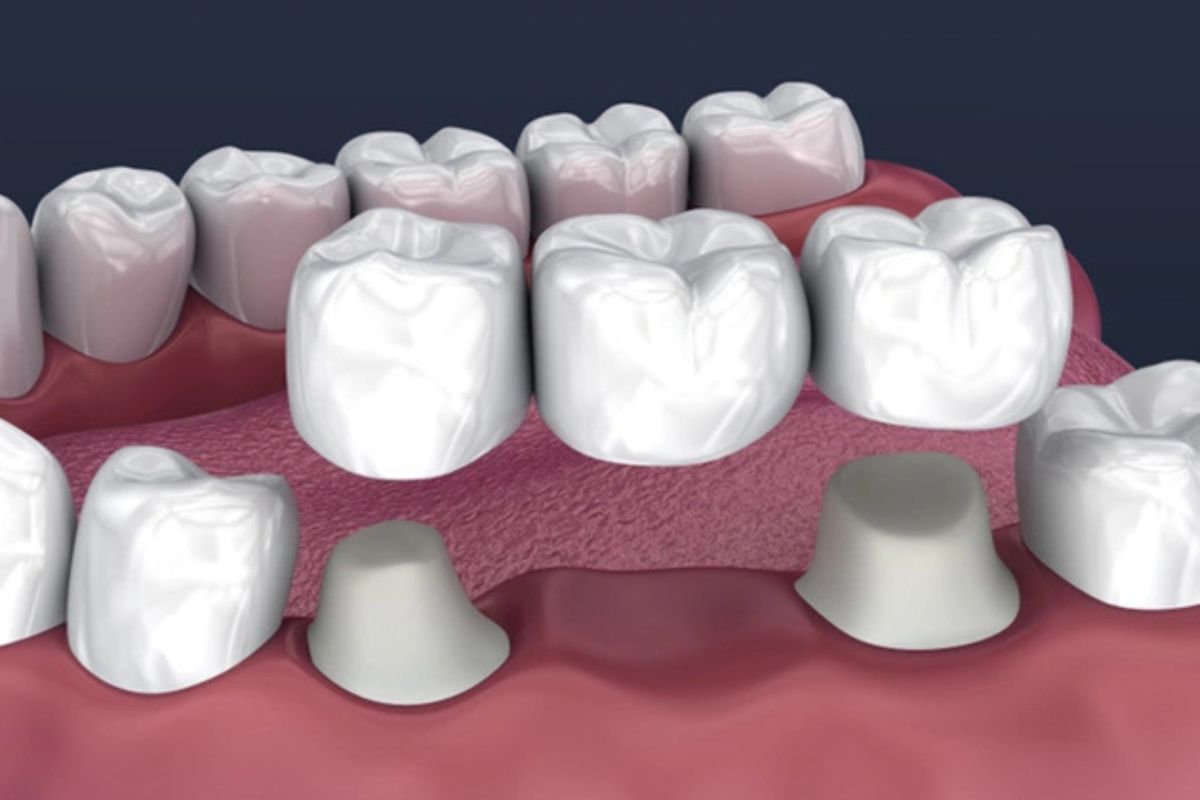
The most common kind of bridge. They consist of a false tooth held in place by dental crowns on either side, attached to the natural teeth that are next to it. These crowns are made to fit the teeth they cover precisely, making the bridge stable and secure. Traditional bridges work well for patients with healthy teeth on either side of the gap; they are durable.
Best for: Those with healthy, natural teeth on each side of the gap who want a reliable, long-lasting option to replace one or more missing teeth.
Benefits:
- Looks natural.
- Strong and durable.
- Can replace several missing teeth.
2. Cantilever Dental Bridges
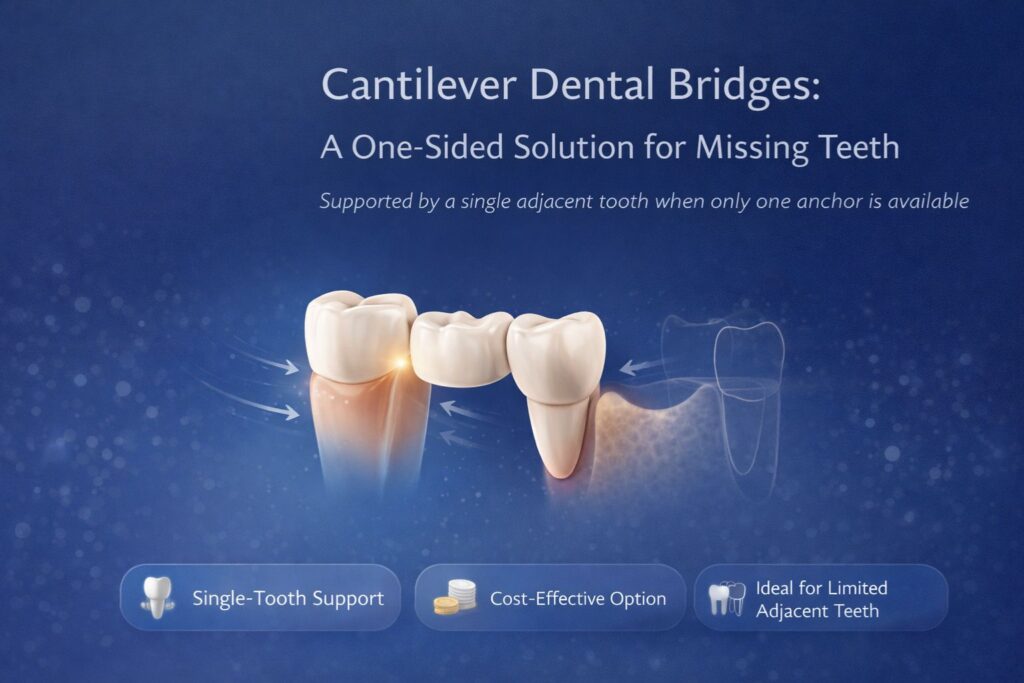
Cantilever bridges are used when only one natural tooth is available to be used next to the gap. Unlike traditional cantilever bridges, which have two teeth per side in support or “anchors,” a cantilever bridge is supported by a single tooth. The adjacent real tooth holds up the false tooth from below, but it is supported on only one side, so it is less secure than traditional cantilever bridges.
Ideal for: Someone who is missing a tooth and has only one adjacent healthy tooth on one side.
Benefits:
- For patients who have little healthy teeth left on one side of the gap.
- Its cost is lower than that of other types.
3. Maryland Dental Bridges
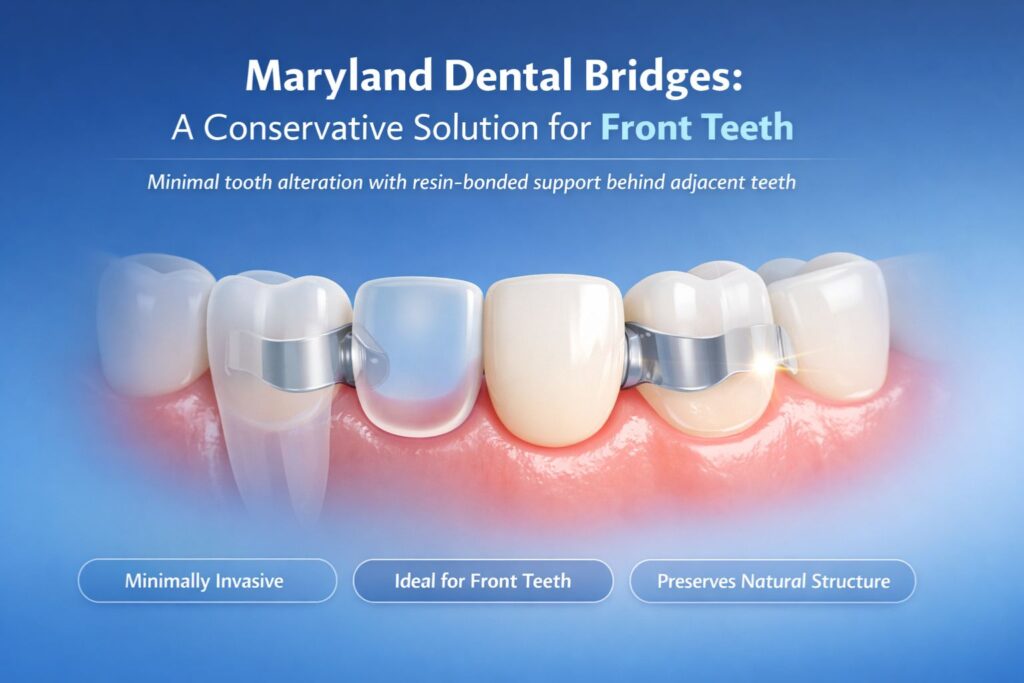
Also known as resin-bonded bridges, Maryland bridges are often used to replace missing front teeth. This type of bridge includes a false tooth, with adhesive metal or porcelain wings attached to the backs of adjacent teeth. Unlike a traditional bridge, little tooth structure from the supporting teeth is removed for Maryland bridges.
Ideal for: Patients needing front teeth replaced but wanting less invasive treatment.
Benefits:
- Adjacent teeth are altered minimally.
- Replacing front teeth, where chewing forces are lower, is best.
- It is more conservative than traditional bridges.
4. Implant-Supported Dental Bridges
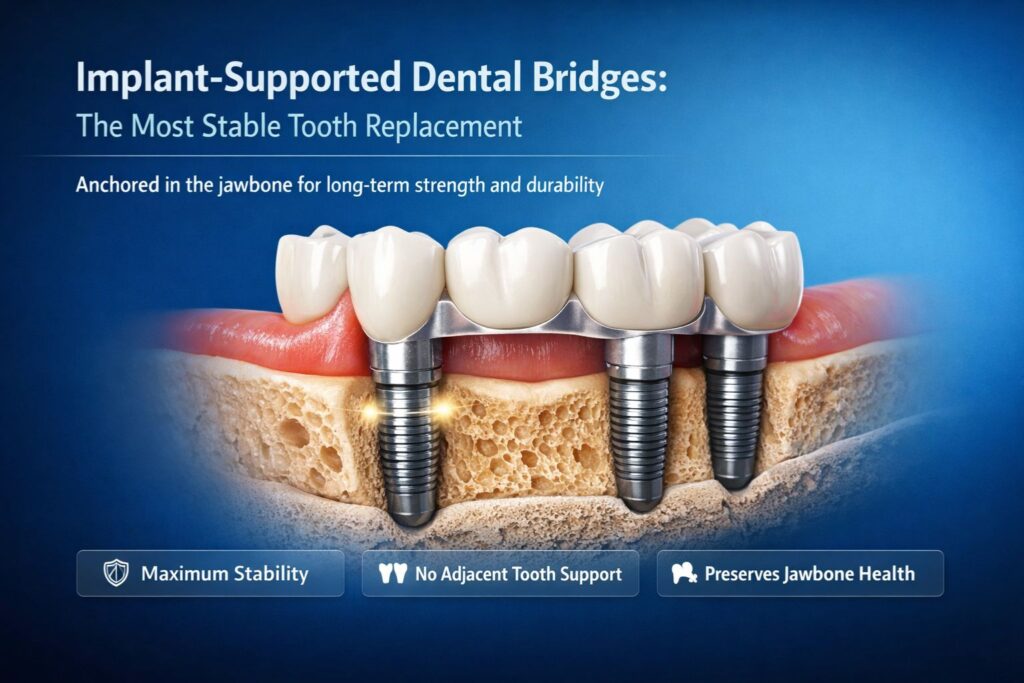
Implant-supported bridges are the most stable and modern bridge option for replacing missing teeth. Instead of using natural teeth as supports, this type of bridge is anchored by dental implants (artificial tooth roots) surgically placed into the jawbone. These implants hold the bridge in place and provide a permanent, solid foundation.
Ideal for: Patients missing more than one tooth or those with weak, damaged surrounding teeth.
Benefits:
- Provides utmost stability and will last a lifetime.
- Doesn’t depend on adjacent teeth for support.
- Helps keep the jawbone healthy.
Are Dental Bridges Right for You?
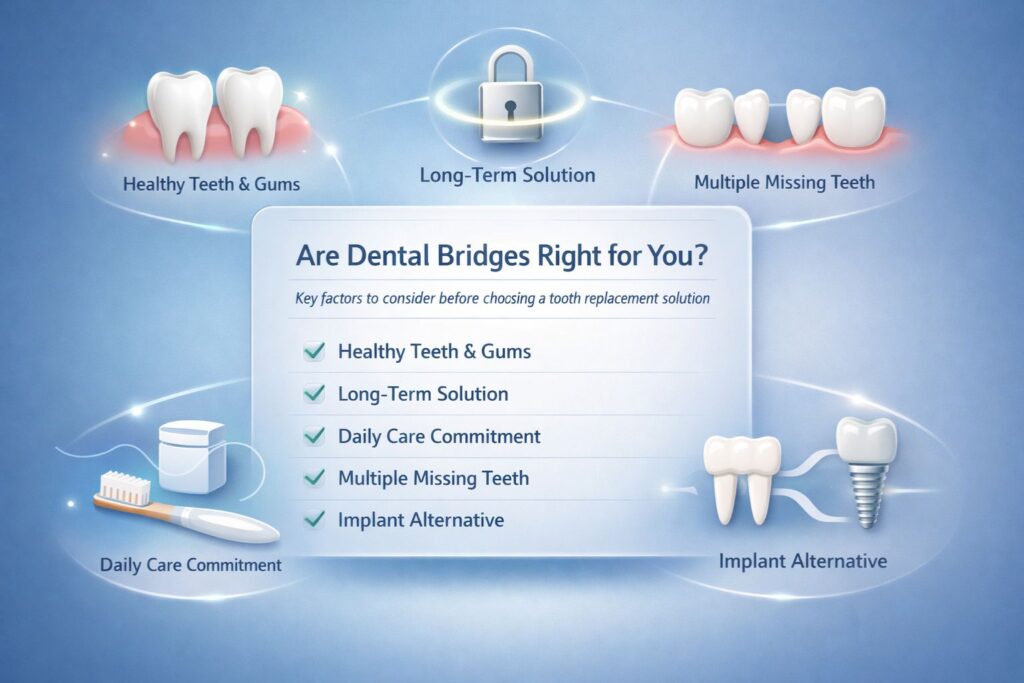
Given the advanced construction technology and materials available today, dental bridges are an attractive option for many people looking to replace one or more missing teeth and improve both function and aesthetics. You need to consider your specific oral health needs and preferences before deciding whether this is indeed the case.
Here are some things to examine in order to determine if a dental bridge might suit your needs:
- Good Oral Health: A dental bridge requires the remaining teeth or gums to be healthy enough to provide support for it. This means that if your teeth or gums are not in good condition, you may need additional treatments before you get a bridge.
- Prefer A Permanent Solution: Dental bridges offer a permanent solution to replace missing teeth. If you want stability and durability in your tooth replacement, a bridge is right for you.
- Ability to Look After a Bridge: With proper care and occasional servicing every year or so, a dental bridge can last a lifetime. If you are willing to look after your own oral hygiene, including brushing and flossing every day and going in for regular check-ups with a dentist, your bridge will serve you well.
- Missing Teeth In Adjacent Areas: If you are missing one or more teeth, a bridge can restore functionality and appearance to your face. This is especially effective for replacing multiple teeth in a row.
- Consider Non-Implant Alternatives: If, for health or financial budgetary reasons, you can’t have dental implants, a dental bridge may well be the answer. It’s less invasive than implants and offers the same benefits.
Thinking through these factors with your dentist can help ensure you make the right decision for both your oral health and overall well-being.
Related Article: Why Your Dental Bridge Might Be Failing
Restore Your Smile Today
If you are missing teeth and considering a dental bridge, Rocky Point Family Dentistry is here to help you find the best solution for your smile. With the many types of bridges available today, you can find one that suits your lifestyle and budget. Our team is dedicated to reconstructing your smile and giving you back the confidence to show it.
Call us today to make an appointment and learn about your options. Know how dental bridges can give you a smile you’re proud of. Each step will be guided by us to ensure your new bridge fits snugly and comfortably in your mouth, addressing both form and function.
Questions People Ask About Dental Bridges
What is a dental bridge?
A dental bridge is a prosthetic device used to replace one or more missing teeth, supported by surrounding natural teeth or implants. It bridges the gap and restores both function and appearance.
How long do dental bridges last?
With proper care, dental bridges can last between 10 and 15 years. Regular checkups and good oral hygiene can help extend their lifespan.
Do I need to remove my dental bridge at night?
No, dental bridges are permanent fixtures that stay in place. However, it’s important to follow your dentist’s aftercare instructions to ensure longevity.
Are dental bridges painful to get?
The procedure for getting a dental bridge is typically not painful, as local anesthesia is used during the placement. Any discomfort afterward is usually mild and temporary.
Can I eat normally with a dental bridge?
Yes, once your bridge is in place, you can eat normally. However, you should avoid very hard or sticky foods to ensure the bridge remains intact.
How do I care for my dental bridge?
Proper oral hygiene, including brushing, flossing, and regular dental visits, is essential to maintaining the health of your dental bridge and surrounding teeth.