7864 US-117 Suite A, Rocky Point, NC 28457, United States


You’ve probably had that moment: looking in the mirror or scrolling through photos, wondering how a straighter smile could change your confidence. But then comes the real question: which option should you choose? With so many modern solutions available, it’s easy to feel stuck between choices.
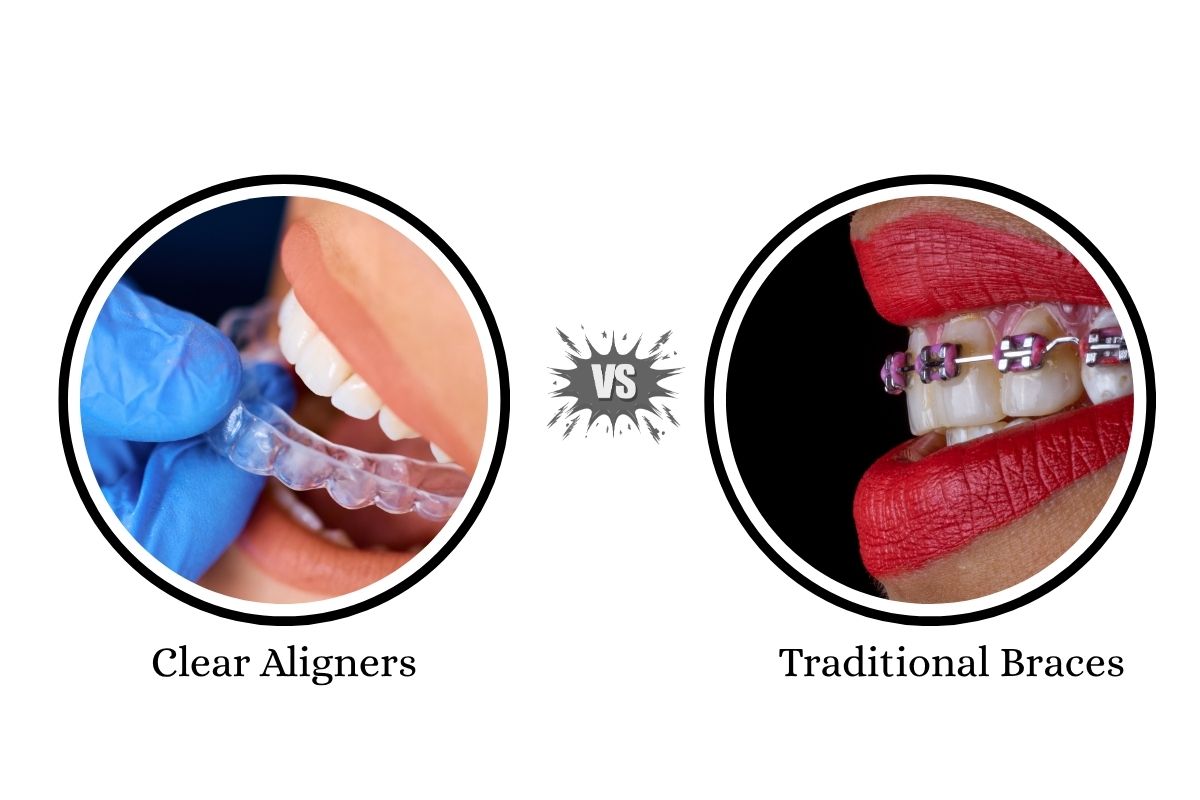
Two of the most common treatments are traditional braces and clear aligners. Both work effectively, but they differ in comfort, appearance, and lifestyle impact. Many patients in Rocky Point find themselves unsure about which route fits their daily routine best.
This guide will break everything down in a simple, practical way, so you can move forward with clarity and confidence.
Why Teeth Alignment Matters More Than You Think
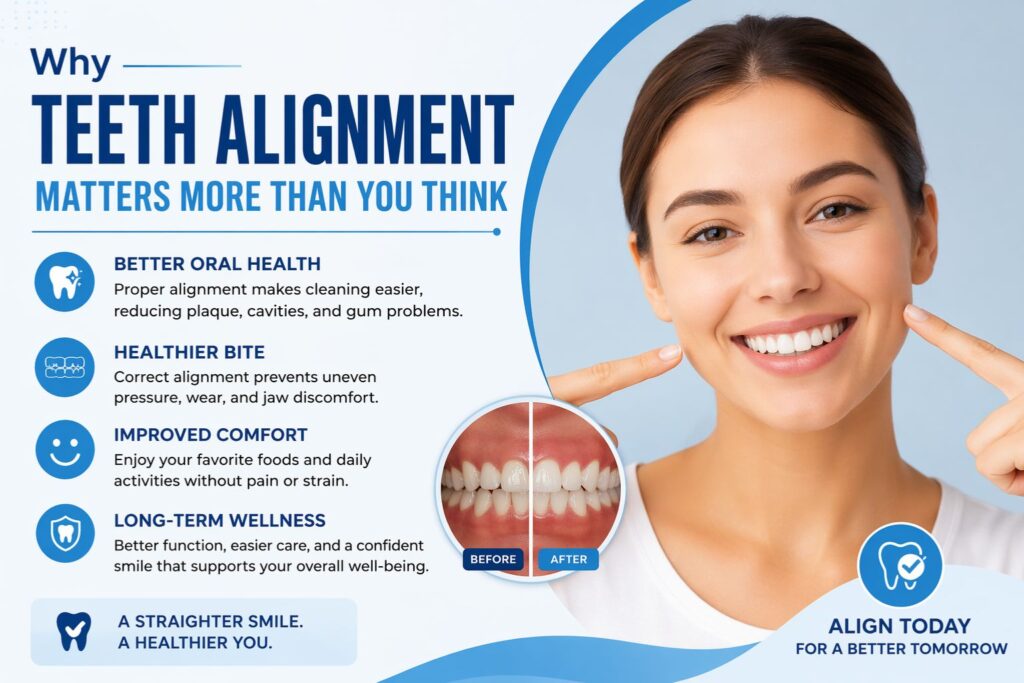
A straighter smile is not only about appearance. Proper alignment plays a key role in your overall oral health. When teeth are crowded or misaligned, cleaning becomes harder. This can lead to plaque buildup, which increases the risk of cavities and gum issues over time.
Alignment also affects your bite. An uneven bite can put unnecessary pressure on certain teeth, leading to wear or discomfort. In some cases, it may even impact how your jaw functions, causing tension or headaches. For many people around Rocky Point, enjoying local favorites like fresh seafood or crunchy snacks becomes less comfortable when alignment issues are present.
Correcting alignment improves function as much as it enhances appearance. It helps distribute pressure evenly, supports jaw health, and makes daily care more effective. That’s why choosing the right treatment option is an important step toward long-term oral wellness.
What Are Clear Aligners?
How They Work
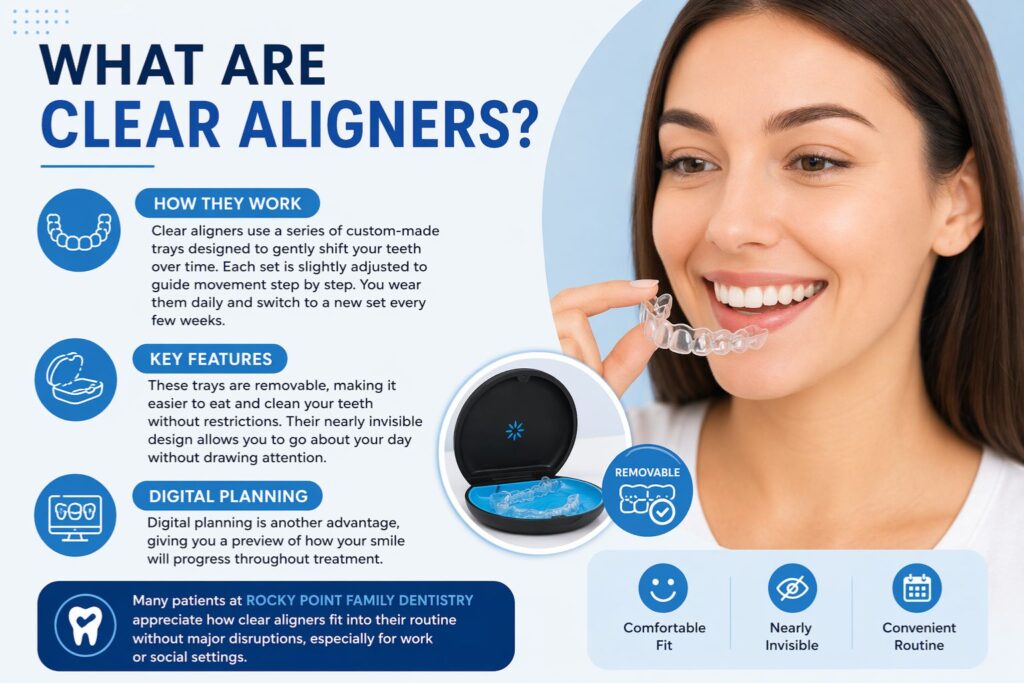
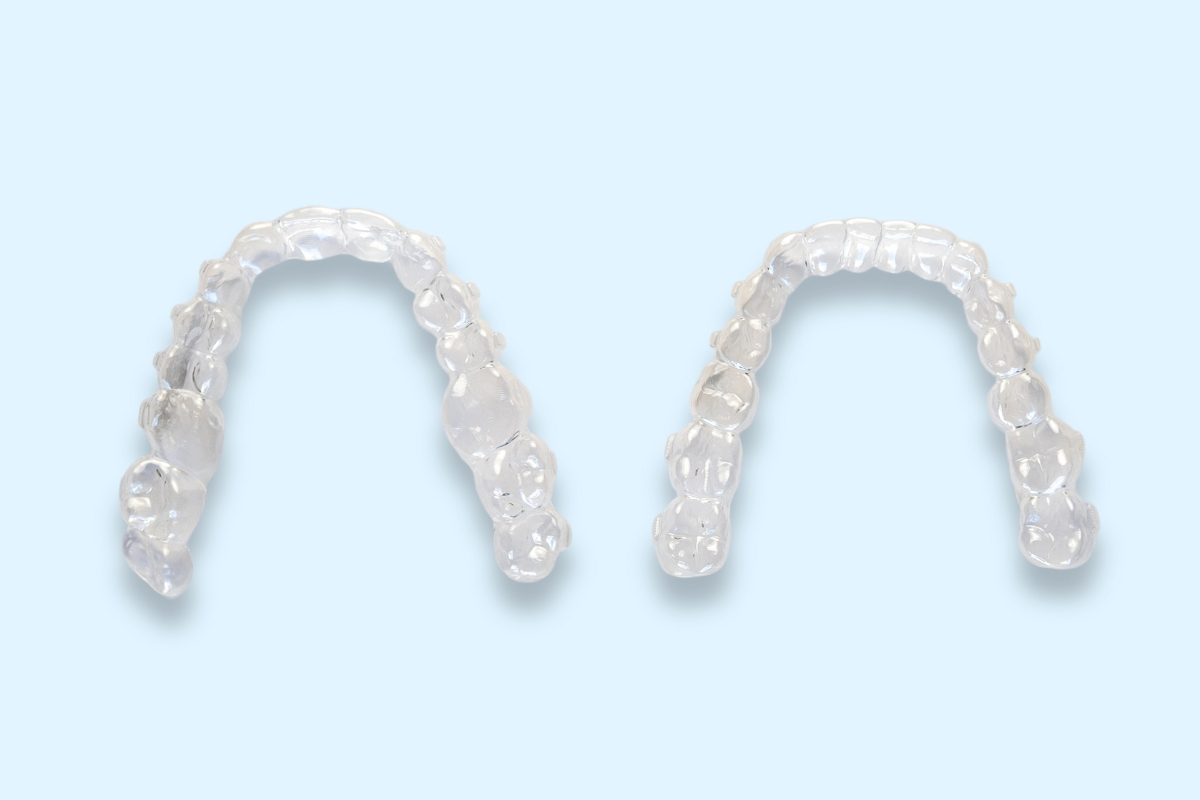
Clear aligners use a series of custom-made trays designed to gently shift your teeth over time. Each set is slightly adjusted to guide movement step by step. You wear them daily and switch to a new set every few weeks.
Key Features
These trays are removable, making it easier to eat and clean your teeth without restrictions. Their nearly invisible design allows you to go about your day without drawing attention. Digital planning is another advantage, giving you a preview of how your smile will progress throughout treatment.
Many patients at Rocky Point Family Dentistry appreciate how clear aligners fit into their routine without major disruptions, especially for work or social settings.
What Are Traditional Braces?
How They Work
Traditional braces use brackets attached to the teeth and connected by wires. These wires apply steady pressure to move teeth into the desired position. Adjustments are made periodically to keep progress on track.
Types of Braces
Metal braces remain the most common and are known for their durability. Ceramic braces offer a more subtle appearance by blending with tooth color. Lingual braces are placed behind the teeth, making them less visible, though they are less commonly used.
Braces are fixed in place, which means they work continuously without needing patient involvement beyond regular care and visits.
Clear Aligners vs. Braces: Side-by-Side Comparison
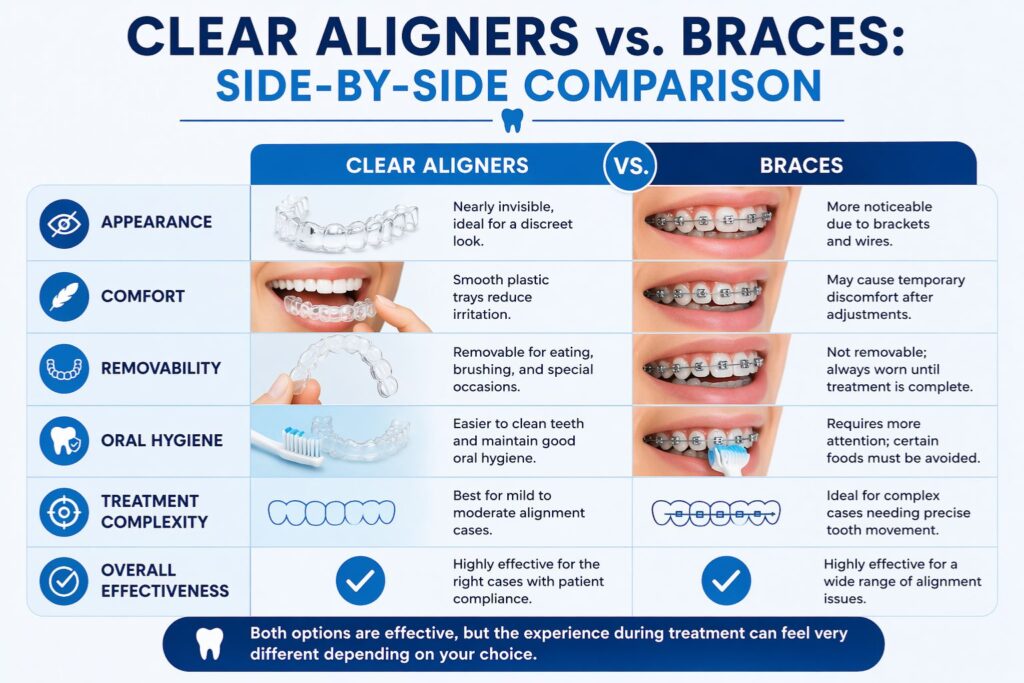
When comparing these two options, the differences become clearer when you consider daily use and comfort. Clear aligners in Rocky Point are designed to be nearly invisible, making them a popular choice for adults who prefer a discreet look. Braces, on the other hand, are more noticeable but provide consistent force throughout treatment.
Comfort is another key factor. Aligners use smooth plastic trays that reduce irritation to the cheeks and gums. Braces may cause temporary discomfort, especially after adjustments, as brackets and wires interact with soft tissues.
Removability sets aligners apart. You can take them out when eating or brushing, which makes maintaining oral hygiene easier. With braces, cleaning requires more attention around brackets, and certain foods must be avoided to prevent damage.
In terms of treatment complexity, aligners are generally suited for mild to moderate cases. Braces are often preferred for more advanced alignment concerns, as they allow for precise control over tooth movement.
Both options are effective, but the experience during treatment can feel very different depending on your choice.
Pros and Cons of Clear Aligners
Clear aligners offer several benefits that make them appealing to many patients. Their discreet appearance allows you to smile, speak, and interact confidently without feeling self-conscious. This is especially helpful during meetings, events, or social gatherings around Rocky Point.
Another advantage is flexibility. You can remove the trays when eating, so there are no food restrictions. Whether you’re enjoying a meal at a local waterfront restaurant or grabbing a quick bite, you don’t have to worry about damaging your treatment. Cleaning is also simpler, as you can brush and floss normally before placing the trays back in.
Fewer office visits are often needed, as treatment is planned digitally in advance. This can save time for those with busy schedules.
However, aligners require consistency. They need to be worn for most of the day to remain effective. They may not be the best option for complex cases, and because they are removable, they can be misplaced if not handled carefully.
Pros and Cons of Traditional Braces
Traditional braces remain a reliable option for many patients. One of their biggest strengths is their ability to treat complex alignment issues. They provide steady, controlled movement, making them effective for a wide range of cases.
Because braces are fixed in place, they do not rely on patient discipline. This can be beneficial for younger patients who may forget to wear removable trays consistently.
On the downside, braces are more visible and can affect appearance during treatment. Certain foods need to be avoided, and cleaning requires extra effort to prevent buildup around brackets. Some patients also experience mild discomfort after adjustments.
Which Option Is Better for Your Lifestyle?
Your daily routine plays a major role in choosing the right treatment. For busy professionals in Rocky Point, clear aligners often fit seamlessly into their schedule. They allow flexibility without drawing attention, making them a convenient option for meetings, events, and social interactions.
For teens and younger patients, braces may be more practical since they do not depend on consistent wear habits. They continue working throughout the day without needing reminders.
Clear aligners also support a more adaptable lifestyle. You can remove them during meals, maintain your usual diet, and keep your oral care routine simple. For many people, this balance of comfort and convenience makes them an appealing choice.
Treatment Time: What Should You Expect?
When planning your smile transformation, understanding the timeline helps set realistic expectations. Clear aligners typically take between 6 and 18 months, depending on how much movement is needed. Traditional braces often require a longer duration, usually around 18 to 24 months, especially for more complex corrections.
One of the biggest advantages of clear aligners is efficiency for mild to moderate cases. Since the treatment is digitally planned, each tray is designed to move teeth with precision. This structured progression often leads to steady and predictable improvements when worn as directed. Many patients appreciate seeing gradual changes early in the process, which keeps motivation high.
Treatment time is influenced by factors like case complexity and patient compliance. Aligners rely on consistent wear, usually 20–22 hours daily, to stay on schedule. The more disciplined you are, the smoother and faster the process tends to be.
Braces, on the other hand, work continuously without removal, which is helpful for complex cases. However, for those who follow instructions carefully, clear aligners in Rocky Point can offer a more flexible and often quicker path to achieving a confident smile.
Maintenance and Oral Hygiene Differences
Maintaining oral hygiene is easier with aligners because they are removable. You can brush and floss normally without working around brackets or wires. This reduces the chances of plaque buildup and helps keep your teeth and gums healthy.
With braces, cleaning requires more attention. Food particles can get trapped around brackets, making brushing and flossing more time-consuming. Special tools may be needed to clean thoroughly.
Both options require a consistent routine. Regular brushing, flossing, and dental visits are essential to maintain oral health throughout treatment.
Who Is a Good Candidate for Each Option?
Clear aligners are well-suited for adults and teens with mild to moderate alignment concerns. They are ideal for those who prefer a discreet and flexible solution.
Traditional braces are often recommended for younger patients or those with more complex alignment needs. They provide the control required for detailed adjustments.
A consultation helps determine which option fits your needs best, based on your oral condition and lifestyle preferences.
Both treatment options offer reliable ways to improve your smile. The right choice depends on your goals, daily routine, and the complexity of your case. Understanding how each option works makes it easier to move forward with confidence.
If you’re ready to explore your options, the team at Rocky Point Family Dentistry can guide you through the process and help you find a solution that fits your lifestyle. Schedule a consultation today and take the next step toward a healthier, more confident smile.
People Also Know
How long should aligners be worn each day?
They should be worn for about 20–22 hours daily to stay effective and keep treatment on track.
Do aligners affect speech?
Some people notice a slight lisp at first, but it usually goes away within a few days.
What foods should be avoided with braces?
Sticky, hard, or chewy foods should be avoided to prevent damage to brackets and wires.
How often do you visit the dentist during treatment?
Most patients visit every 6–8 weeks to monitor progress and make adjustments if needed.
Which option is easier to maintain?
Aligners are easier to maintain since they can be removed for brushing and flossing.